
This easy recipe yields a batch of the creamiest, most tropical coconut mango rice pudding you can make at home.
It’s silky, subtly sweet, and loaded with fresh mango flavor—perfect for warm nights or as a bright finish to any meal.
Why this coconut mango rice pudding works

The combination of fragrant basmati rice and rich coconut milk creates a lusciously smooth pudding base that’s light but deeply satisfying.
Ripe mango purée adds bright acidity and a naturally sugary finish, so you get dessert-level sweetness without heavy syrups or cloying sauces.
What you’ll need (ingredients overview)
This recipe is naturally dairy-free and easy to make with pantry staples and fresh fruit.
You’ll need basmati rice, coconut milk, a gentle sweetener, shredded coconut for texture, vanilla and a pinch of salt, plus ripe mangos for the purée.
Ingredient amounts (serves 4)
• 150 g basmati rice — rinsed until water runs clear.
• 1 can (200 ml) full-fat coconut milk plus 300–400 ml water — to make a creamy yet pourable cooking liquid.
• 40 g shredded coconut — for toasting or folding in at the end.
• 15 g sugar or other sweetener — adjust to taste, or use maple syrup for a vegan swap.
• 1 tsp vanilla extract and a pinch of salt — these coax out the flavor and make the pudding taste richer.
• 2 large ripe mangos (about 300–350 g peeled) — or 300 g frozen, thawed and drained, for the purée.
• Optional: lime or lemon juice to brighten the mango purée, and extra chopped mango for garnish.
Equipment
A heavy-bottomed saucepan keeps the pudding from scorching and helps the rice cook evenly.
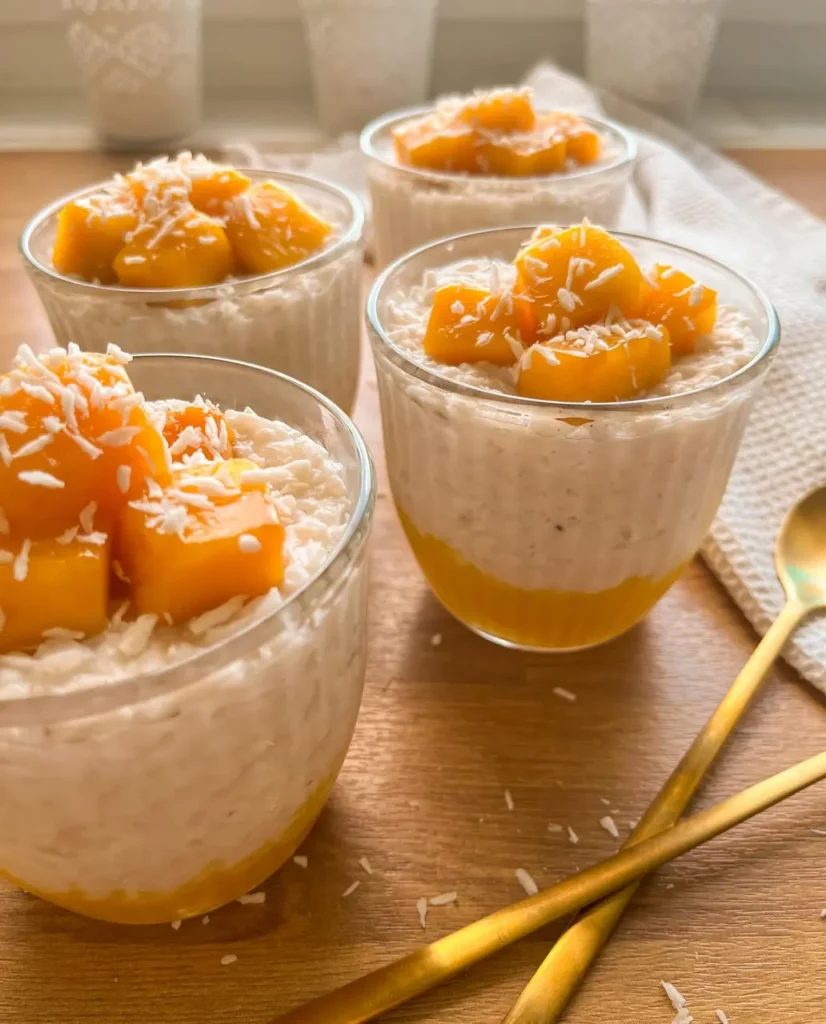
A blender or stick blender makes quick work of the mango purée, and clear glasses show off the pretty layers if you want to present it as parfaits.
The method — step by step with tips
Rinse the basmati under cold running water until the water runs clear to remove excess starch.
This prevents a gluey texture and keeps the grains separate and tender.
Par-cook the rice: bring 450 ml water and a pinch of salt to a simmer, add the rinsed rice, and cook gently for about 8–10 minutes until the rice is just tender but still has a bite.
Drain any excess water if needed and return the rice to the pot.
Warm the coconut milk with the vanilla and sweetener in a separate pan until just below a simmer.
Do not boil vigorously; gentle heat helps the coconut fats stay silky and prevents separation.
Add the warm coconut mixture to the rice in three additions, allowing the rice to absorb most of the liquid between pours.
Stir frequently over low heat so the rice softens without sticking, and the pudding thickens slowly to a creamy texture.
When the final addition has been absorbed and the rice is soft and creamy, fold in the shredded coconut off the heat for texture and flavor.
If you like a nuttier note, toast the shredded coconut in a dry pan for 2–3 minutes until golden and sprinkle on top at serving.
While the rice is finishing, cook the mango briefly with a tablespoon of lemon or lime juice and a tablespoon of water if the fruit is underripe.
Puree until smooth, tasting and adding sweetener only if the mango needs it.
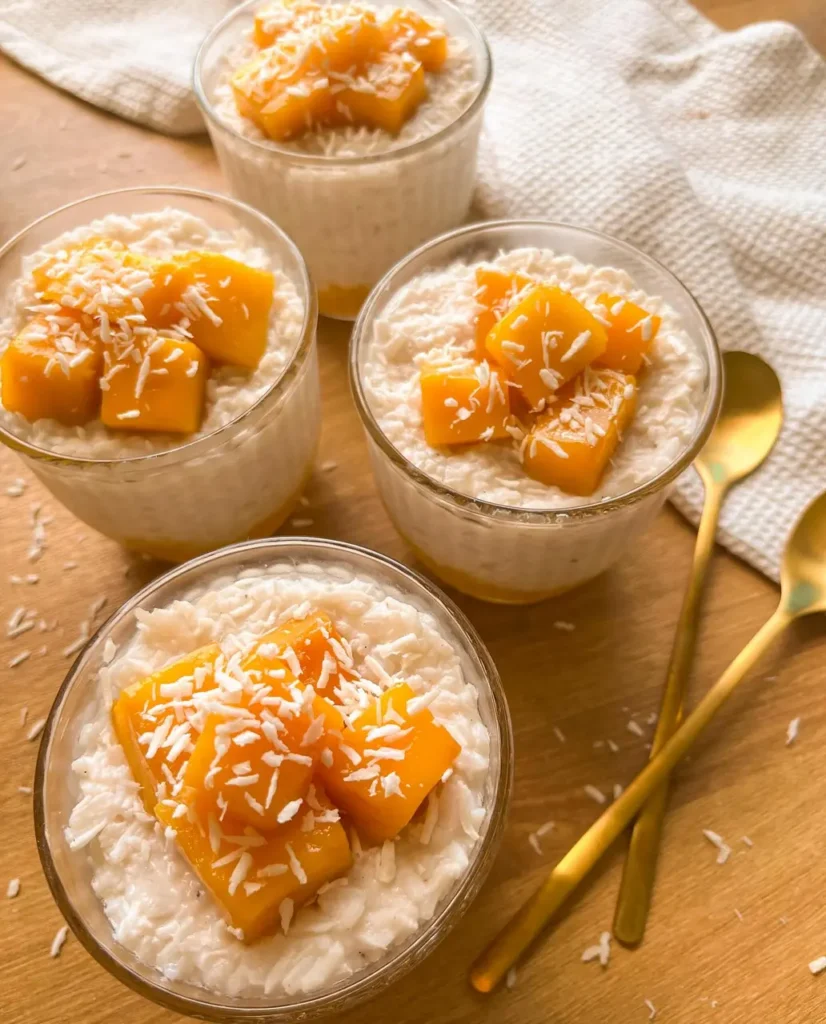
Layer or spoon the warm rice pudding into bowls or glasses and top generously with the mango purée.
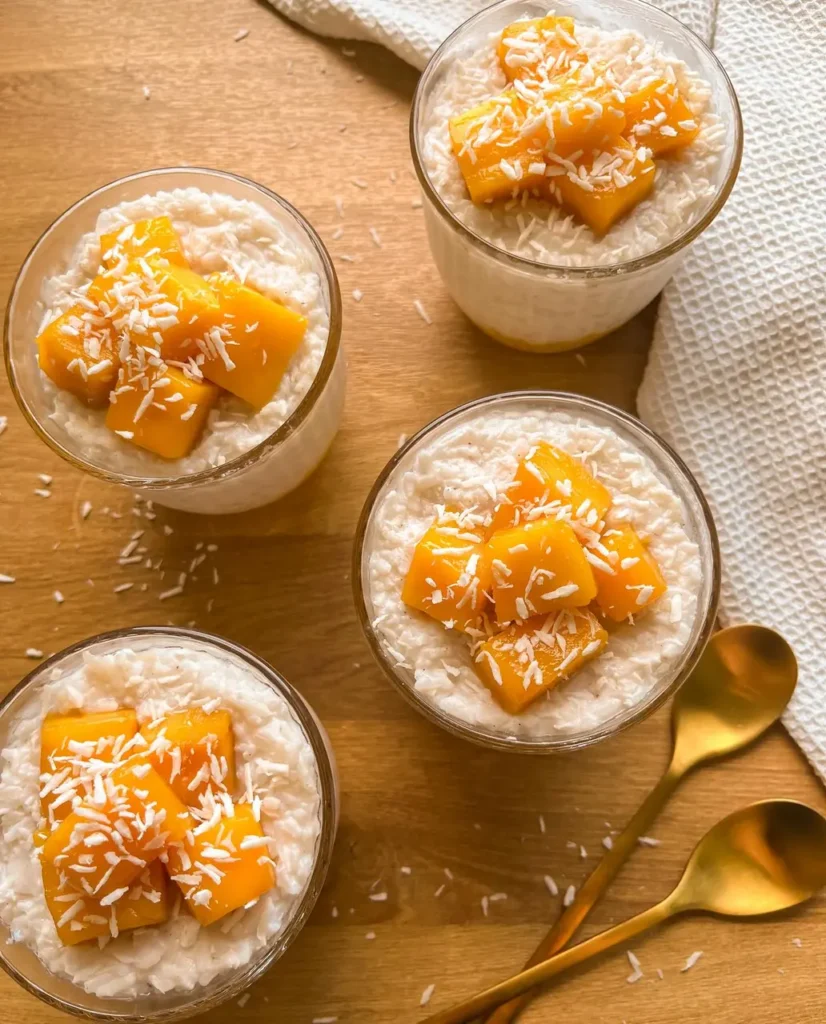
Garnish with extra mango cubes, toasted coconut, or a scatter of chopped pistachios for crunch.
Texture and consistency — what to aim for
Cook the pudding until the rice grains are tender but still hold their shape so the final result feels substantial rather than gloopy.
It should be pourable but not watery; it will thicken a bit as it cools and when chilled.
If your pudding becomes too thick, stir in a few tablespoons of coconut milk or water until you reach the desired creaminess.
If it’s too thin, simmer gently without a lid for a few minutes until it reduces to the right consistency.
Variations and flavor boosts
Add a pinch of cardamom or a scrape of fresh ginger while cooking for warming, aromatic notes.
For a protein boost, stir in a few spoonfuls of Greek yogurt (or coconut yogurt for vegan) just before serving for extra silkiness.
Swap basmati for short-grain rice if you prefer an intrinsically creamier, stickier pudding texture.
For a lighter version, replace half the coconut milk with unsweetened almond or oat milk.
If you want a layered dessert, alternate pudding with a thin coconut cream or whipped coconut topping for an elegant parfait.
For inspiration on coconut-forward desserts, check out this coconut mousse cake recipe which pairs beautifully with similar flavors.
Serving suggestions and pairings
Serve this pudding warm with a drizzle of reduced mango purée or chill it and present in clear glasses as a pretty layered dessert.
It pairs beautifully with crisp baked items, such as simple coconut macaroons or a slice of light vanilla cake.
A sprinkle of toasted coconut, chopped pistachios, or a few raspberries provides contrast in color and texture.
For a brunch twist, serve alongside tropical fruit salads or with coconut-and-strawberry cake slices for a show-stopping spread.
Make-ahead, storage and reheating
Cool the pudding completely before covering and refrigerating; it keeps well for up to 3 days in an airtight container.
If you prefer it warm, reheat gently on the stove with a splash of coconut milk and stir until creamy.
The mango purée is best used within 24–48 hours for peak flavor, though it will keep up to 3 days if tightly sealed.
If you plan to assemble parfaits, store components separately and layer just before serving to keep textures bright.
Troubleshooting
If your rice is still hard after the coconut has been absorbed, add a little hot water and continue to simmer on low for another 5–10 minutes.
If the coconut milk splits, remove from heat and whisk in a splash of room-temperature liquid to bring it back together.
If the mango purée tastes flat, add a squeeze of citrus to lift the flavor and a touch of sweetener if needed.
For a smoother purée, press it through a fine sieve or blend longer for a silky finish.
Frequently Asked Questions
Can I use jasmine or short-grain rice instead of basmati?
Yes — jasmine will lend floral notes while short-grain rice will make the pudding inherently creamier and stickier.
Is there a good sugar substitute for this pudding?
Maple syrup, honey, or a liquid sweetener like agave work well; adjust amounts to taste and remember liquid sweeteners add moisture.
Can I make this recipe vegan?
This base is naturally vegan when you choose plant-based sweeteners and coconut milk, and keeping yogurt optional as coconut yogurt if used.
What if my mangos aren’t ripe?
Cook them briefly with a little water and citrus to soften and sweeten, then sweeten to taste before blending.
How can I make this pudding ahead for a party?
Prepare the pudding and purée separately up to 48 hours ahead, then assemble in glasses right before serving for the best texture.
For another coconut-charged treat, try pairing leftovers with our coconut crumble pie with blueberries for a creative dessert mashup.

Creamy Coconut Mango Rice Pudding
Description
Ingredients
Rice (par-cook)
- 150 g basmati rice (rinsed) rinsed until water runs clear
- 300 ml water (for initial par-cook) for pre-cooking the rice
Coconut cooking liquid & flavorings
- 200 ml full-fat coconut milk use canned coconut milk
- 400 ml water to mix with coconut milk and add in batches
- 15 g sweetener granulated sugar, caster sugar or preferred sweetener; adjust to taste
- 1 tsp vanilla extract or 1/2 vanilla bean scraped
- pinch salt just a pinch to enhance flavor
- 40 g shredded coconut to fold in at the end or toast for garnish
Mango purée
- 2 pieces ripe mangoes peeled and chopped (about 300–350 g total) or use 300 g frozen, thawed
- 1 tbsp lemon or lime juice optional, brightens the purée
- to taste sweetener for mango purée only if mangoes are underripe
Instructions
Main process
- Rinse the basmati rice under cold running water until the water runs clear to remove excess starch. Combine the rinsed rice with 300 ml water and a pinch of salt in a saucepan, bring to a gentle simmer and cook for about 8–10 minutes until the rice is just tender; drain any excess water and return rice to the pan.
- In a separate pot, warm the coconut milk with 400 ml water, the sweetener and vanilla over low heat until just below a simmer. Do not boil vigorously — heat gently so the coconut stays silky.
- Add the warm coconut mixture to the partially cooked rice in three additions, allowing the rice to absorb most of each portion before adding the next. Keep the pan on low heat and stir frequently so the rice softens evenly and the mixture thickens to a creamy consistency, about 15–20 minutes total after adding the coconut liquid.
- When the final addition is mostly absorbed and the rice is soft but individual grains still hold shape, remove from the heat and fold in the shredded coconut. Taste and adjust sweetness or vanilla, and let the pudding rest briefly so flavors meld.
- While the rice finishes, place chopped ripe mango with the lemon or lime juice into a blender and purée until smooth; add a small amount of sweetener only if needed. If mangoes are slightly underripe, warm them with a tablespoon of water for a minute before blending to soften.
- Spoon warm pudding into bowls or parfait glasses and top with a generous layer of mango purée. Garnish with extra mango cubes, toasted shredded coconut, or chopped pistachios; serve warm or chill for at least 30 minutes for a colder dessert.
Notes
- For a nuttier finish, toast the shredded coconut in a dry pan for 2–3 minutes until golden before folding in or sprinkling on top.
- If the pudding thickens too much after cooling, stir in a splash of coconut milk or warm water to loosen before serving.
- Prepare the rice pudding and mango purée up to 48 hours ahead; store separately and assemble just before serving for best texture.
Leave a Reply