
These high protein cottage cheese bagels deliver bakery-style chew with a simple ingredient list and zero yeast.
They bake up golden, hold toppings well, and fit neatly into a high-protein breakfast or post-workout meal.
What sets this version apart is a smoother dough technique, small formula tweaks for structure, and practical guidance so your bagels rise evenly without boiling.
You’ll get reliable results even if you’re new to baking.
Recipe Card
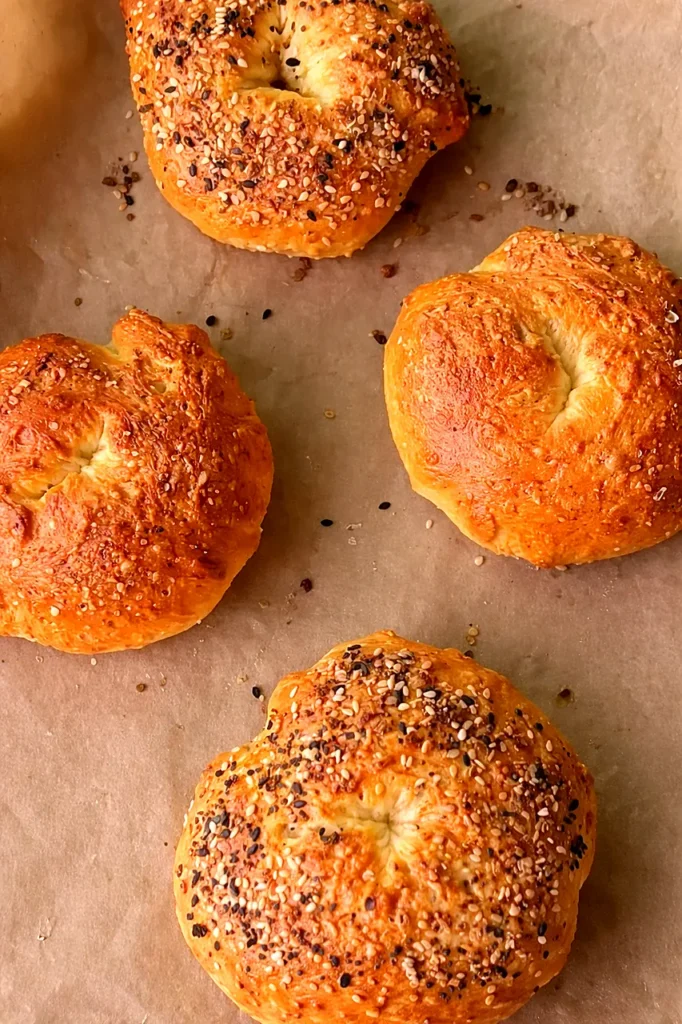
High Protein Cottage Cheese Bagels
Yield: 4 bagels
Prep Time: 15 minutes
Rest Time: 10 minutes
Bake Time: 24–28 minutes
Total Time: About 55 minutes
Skill Level: Beginner
Oven Temperature: 375°F (190°C)
Ingredients
- 1 cup cottage cheese, blended until fully smooth
- 1¼ cups all-purpose flour
- 2¼ teaspoons baking powder
- ½ teaspoon fine salt
- 1 teaspoon olive oil (improves crumb and browning)
Optional topping
- 1 egg, lightly beaten with 1 tablespoon water
- Everything bagel seasoning, sesame seeds, or coarse salt
Instructions
- Preheat the oven to 375°F and line a baking tray with parchment paper.
- In a large bowl, whisk flour, baking powder, and salt until evenly combined.
- Add blended cottage cheese and olive oil, mixing with a spoon until a shaggy dough forms.
- Turn the dough onto a lightly floured surface and knead for 4 minutes until cohesive but slightly textured.
- Cover and rest the dough for 10 minutes to hydrate the flour fully.
- Divide into four equal pieces and roll each into a smooth ball.
- Poke a hole through the center of each ball and gently stretch to form bagels with wide centers.
- Transfer to the baking tray, brush with egg wash if using, and add toppings.
- Bake for 24–28 minutes until golden and firm to the touch.
- Cool for 10 minutes before slicing for the best texture.
Nutrition (per bagel, approximate)
- Calories: 190
- Protein: 12–14g
- Carbohydrates: 28g
- Fat: 3g
Why Cottage Cheese Works in Bagels
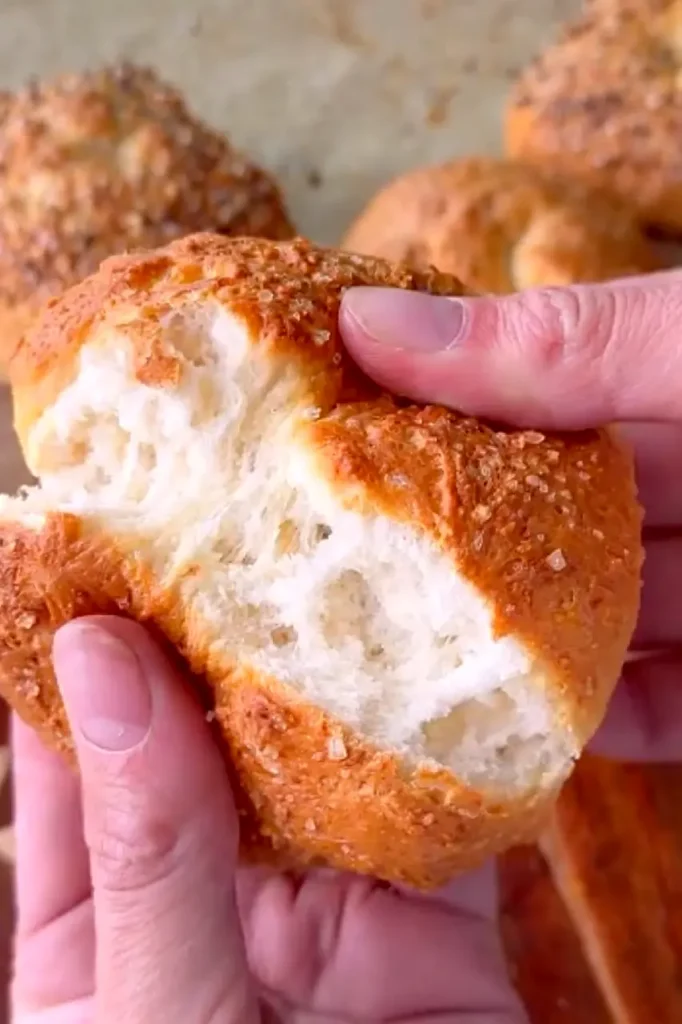
Cottage cheese brings moisture, protein, and mild tang without overwhelming the dough.
When blended smooth, it behaves similarly to a thick dairy base, binding flour without yeast or long fermentation.
The protein content helps the bagels feel filling and substantial.
This makes them suitable for breakfast, meal prep, or savory sandwiches without dryness.
Compared to Greek yogurt doughs, cottage cheese creates a softer interior.
It also browns more evenly when baked at a slightly higher temperature.
Dough Texture and What to Expect
This dough will not look perfectly smooth, even after kneading.
Small curd proteins create light texture rather than a glossy finish.
A short rest after kneading is critical.
It allows flour to hydrate, making shaping easier and preventing cracking.
If the dough feels sticky, dust lightly with flour.
Avoid adding too much flour, which can make bagels dense.
Shaping Bagels That Hold Their Form
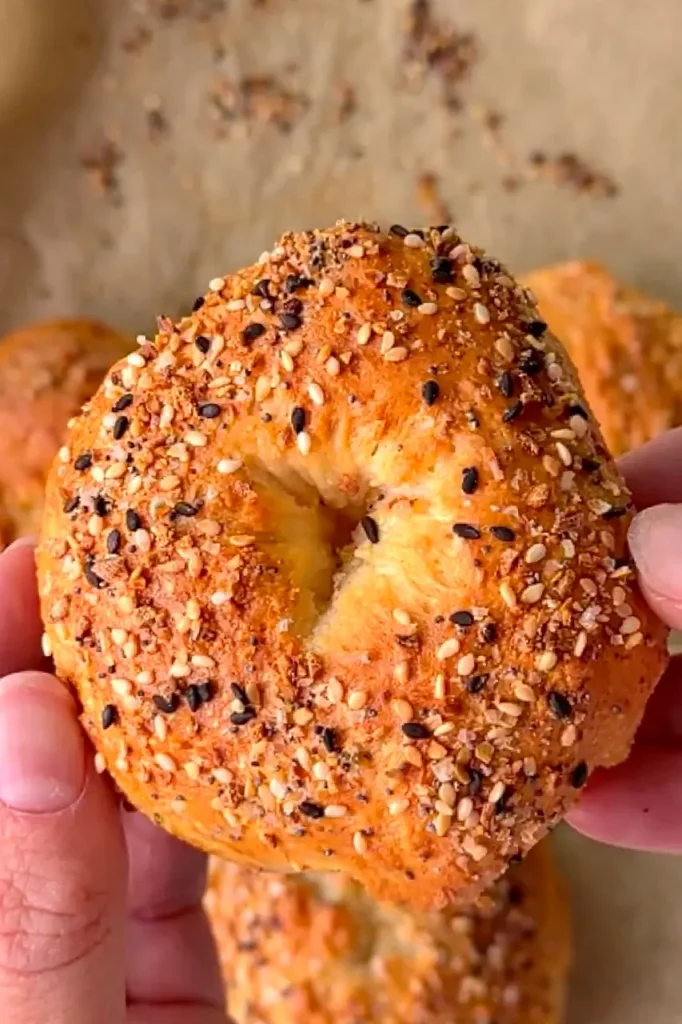
Start with evenly weighed dough portions for uniform baking.
Rolling smooth balls before shaping reduces surface tearing.
The center hole should be wider than expected.
Bagels expand inward during baking and can close if the hole is too small.
Gently stretch rather than force the dough.
Tension causes uneven rise and lopsided shapes.
Baking Tips for Golden, Chewy Bagels
A 375°F oven promotes better lift and browning than lower temperatures.
These bagels rely on baking powder for rise, so heat matters.
Use parchment paper rather than greasing the tray.
It prevents sticking and encourages even bottoms.
Rotate the tray halfway if your oven has hot spots.
This ensures uniform color across all bagels.
Flavor Variations That Work Well
Savory seasonings complement the mild dough best.
Everything seasoning, za’atar, sesame, or dried onion all bake beautifully.
For a cheese-forward version, fold in 2 tablespoons grated hard cheese.
This adds depth without altering structure.
You can also keep them plain for sweet toppings.
Nut butters, honey, or fruit spreads pair well with the subtle tang.
Serving and Storage Suggestions
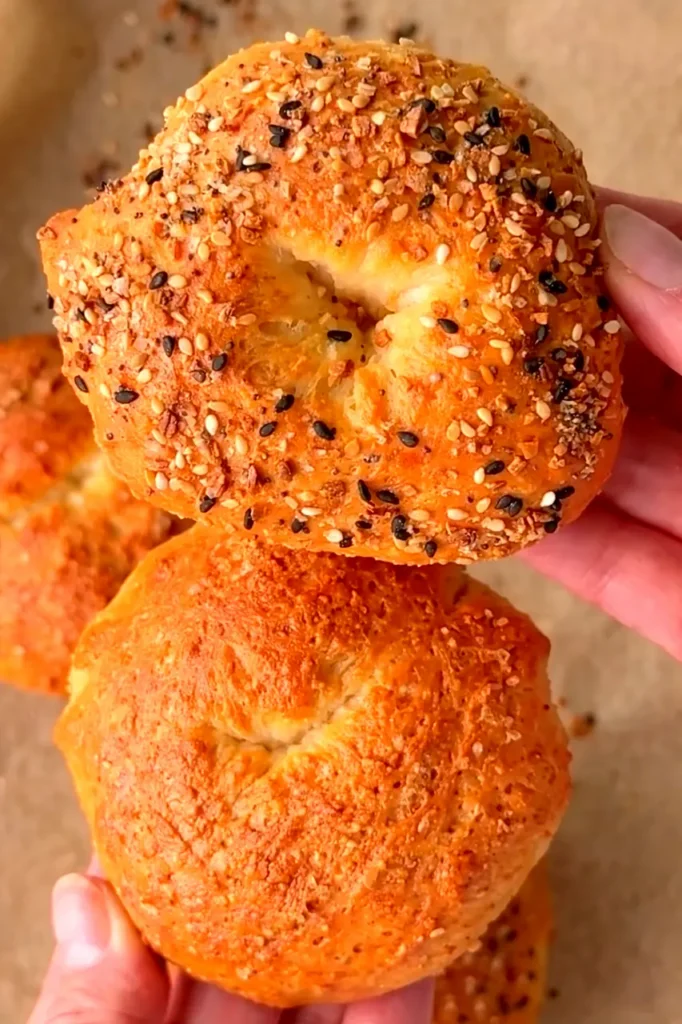
Slice once fully cooled to avoid gumminess.
A serrated knife works best for clean cuts.
Serve toasted for extra chew and crisp edges.
These bagels hold up well to spreads, eggs, or grilled fillings.
Store in an airtight container at room temperature for one day.
For longer storage, refrigerate up to four days or freeze for one month.
Make-Ahead and Meal Prep Tips
Bake a batch at the start of the week for quick breakfasts.
They reheat well in a toaster or dry pan.
If freezing, slice first for convenience.
This allows straight-from-freezer toasting without thawing.
Avoid microwaving for reheating.
It softens the crumb too much and dulls flavor.
Common Mistakes to Avoid
Skipping the blending step leaves visible curds.
This weakens structure and creates uneven pockets.
Over-flouring during kneading makes bagels heavy.
Use just enough flour to manage stickiness.
Underbaking results in a pale, doughy center.
The tops should be clearly golden before removal.
Frequently Asked Questions
Can I use low-fat cottage cheese?
Yes, but full-fat produces better texture and flavor.
Do these taste like traditional bagels?
They are softer and lighter, closer to bakery-style protein bagels.
Can I make them gluten-free?
A 1:1 gluten-free flour blend works, but expect a slightly denser crumb.
Is boiling required?
No boiling is needed, which keeps the recipe fast and beginner-friendly.
Why did my bagels spread too much?
This usually means the dough was too wet or not rested long enough.
These high protein cottage cheese bagels prove that simple ingredients can deliver structure, nutrition, and real flavor.
With the right technique, they become a reliable staple you’ll want to bake again and again.
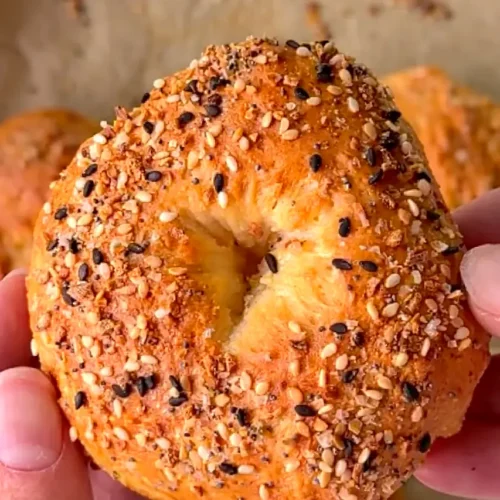
High Protein Cottage Cheese Bagels (No Yeast)
Ingredients
Bagel Dough
- 1 cup cottage cheese blended until completely smooth
- 1 ¼ cups all-purpose flour
- 2 tsp baking powder
- ½ tsp fine salt
Optional Topping
- ½ egg beaten with 1 tbsp water (for egg wash, optional)
- everything bagel seasoning, sesame seeds, or coarse salt optional, for topping
Instructions
Make the Dough
- Preheat the oven to 350°F (175°C). Line a baking tray with parchment paper.
- In a large bowl, whisk together the flour, baking powder, and salt.
- Add the blended cottage cheese and mix with a wooden spoon until a shaggy dough forms. Finish mixing with your hands until it comes together.
- Transfer the dough to a lightly floured surface. Rest the dough for 10 minutes, then knead for 3–5 minutes until the dough is cohesive and somewhat smooth (it may still look slightly textured).
- Shape the dough into a ball, then divide into 4 equal pieces.
Shape and Bake
- Shape each piece into a ball. Poke a hole through the center and gently stretch to form a bagel shape. Make the hole larger than you think, since it will shrink slightly as the bagels bake.
- Place the bagels on the prepared baking tray. Brush with egg wash if using, then sprinkle with your preferred seasoning.
- Bake for 25–30 minutes, or until golden brown.
- Cool for 10 minutes before slicing. Serve warm or toasted with your favorite spread or filling.
Notes
- Blend the cottage cheese until smooth for the best texture and even rise.
- If the dough feels sticky, dust the work surface lightly with flour, but avoid adding too much or the bagels can turn dense.
- Make the center holes larger than you think—bagels puff in the oven and the holes shrink as they bake.
- Let the bagels cool for about 10 minutes before slicing to prevent a gummy texture.
Leave a Reply