
There are weeknight dinners that feel like an effort, and then there are the ones that come together almost effortlessly — yet somehow taste like you’ve been cooking for hours. This chicken Penang curry is firmly in the second camp. Creamy coconut sauce, tender chicken, a rainbow of vegetables, and that unmistakable warm, aromatic flavour that makes everyone at the table go quiet for a few seconds before someone says “this is so good.”
I’ll be honest — Thai-style curries used to feel intimidating to me. Like they required a trip to a specialty grocer, a pantry full of obscure pastes, and some mysterious technique I hadn’t mastered yet. But once I discovered just how accessible this dish can be with the right curry sachets, it completely changed our dinner rotation. Now it’s one of those meals I genuinely look forward to making, especially when I want something satisfying without the fuss.
This version is loaded up with baby corn, broccoli, red capsicum, and red onion — because honestly, the more vegetables, the better. If you’re a fan of curry-style dinners that pack in the good stuff, you’re going to love this one.
What Is Penang Curry?
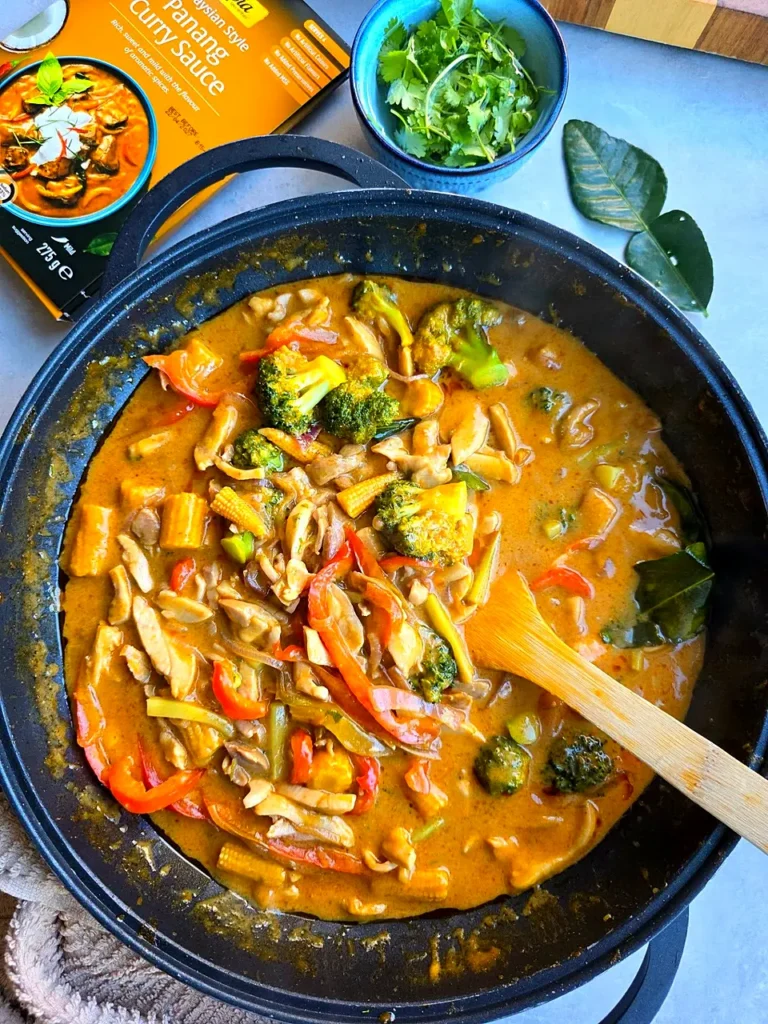
Penang curry (also written as Panang curry) is a Thai-style curry that sits on the milder, creamier end of the spectrum compared to, say, a red or green Thai curry. It’s fragrant and rich rather than fiery, with coconut milk giving the sauce a velvety, almost silky texture.
The name comes from the Malaysian island of Penang, and the curry has a distinct depth of flavour that comes from ingredients like makrut lime leaves, fish sauce, and aromatic curry paste. It’s thicker than many other Thai curries, meaning the sauce clings beautifully to the chicken and vegetables rather than pooling at the bottom of the bowl.
The version I make at home uses pre-made curry sachets (more on that below), which makes this an achievable weeknight dinner without sacrificing a single drop of flavour.
Why This Recipe Works So Well
A few things make this dish a real winner:
- It feeds a crowd without breaking the bank. The total ingredients come in well under $25, and it comfortably serves four people.
- The veggies stretch the dish beautifully. Broccoli, baby corn, and capsicum soak up the curry sauce and add texture, colour, and nutrition to every bowl.
- Mild enough for the kids, flavourful enough for the adults. This is a genuinely family-friendly curry that doesn’t need to be toned down or spiced up depending on who’s sitting at the table. That said, if you love a bolder hit, there’s room to layer in extra flavour — which I’ll walk you through.
- The rice goes on top. Yes, on top! It’s a little twist that makes serving feel intentional rather than rushed, and it’s become our non-negotiable way to plate this dish.
If you’re also a fan of chicken and rice bowl dinners, this Penang curry is going to earn a permanent spot in your rotation.
What You’ll Need
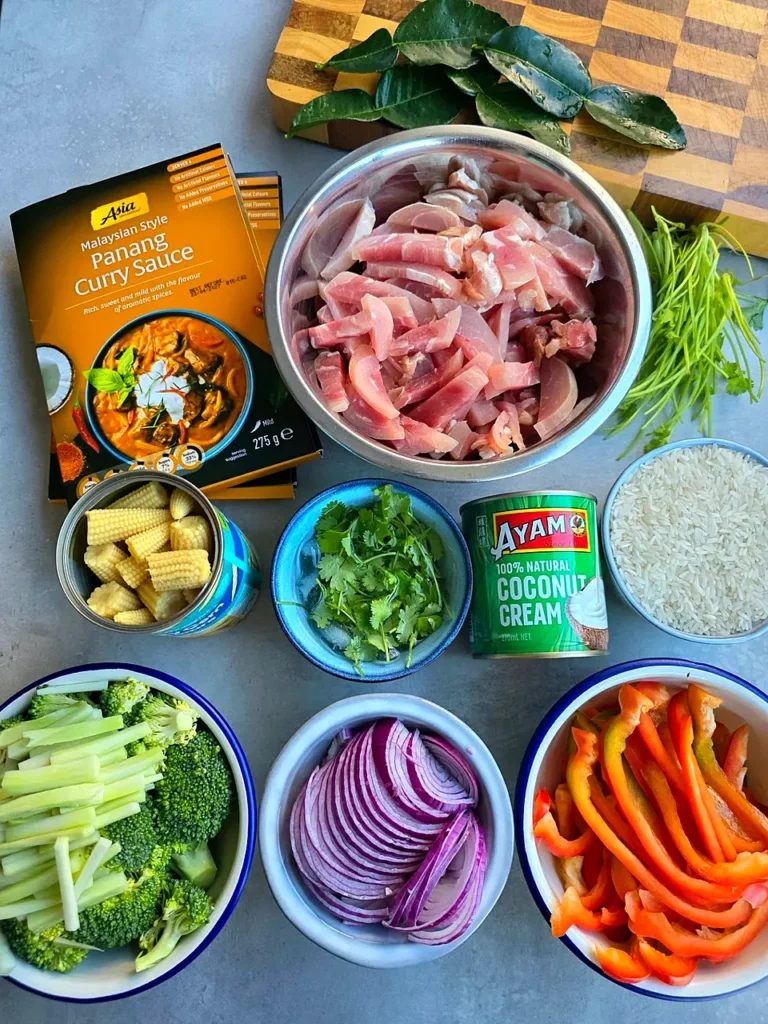
Here’s everything that goes into this recipe, along with a few notes:
For the Curry
- 600g boneless chicken — cut into bite-sized slices. Breast or thigh both work well here; thighs will give you a little more richness.
- 2 Penang curry sachets — I use the ones from Aldi, which are wonderfully mild and approachable. I use two sachets because I load up on vegetables — one sachet would feel a little thin with this amount of ingredients. They’re budget-friendly too at around $3.99 each.
- 270ml coconut cream — this is what gives the sauce its signature creaminess. Don’t be tempted to swap this for a light version; full fat is the way to go.
- 410g baby corn spears — drained and sliced into thirds. These add a lovely crunch and absorb the sauce beautifully.
- 1 head broccoli — cut into florets, with the inner stem sliced into matchsticks. The stem is often discarded but it’s genuinely delicious when it’s cooked through and coated in curry sauce.
- 1 red onion — peeled and thinly sliced.
- 1 red capsicum — thinly sliced. The sweetness pairs really well with the savoury curry base.
- 3 makrut lime leaves — we’re lucky enough to have these growing in our garden. If you can find them at an Asian grocer, grab a bunch and freeze the extras. They make a noticeable difference to the depth of flavour.
- Fresh coriander — stems and leaves used separately (more on this in the method).
From the Pantry
- Soy sauce
- Fish sauce
- White sugar
- Salt
For Serving
- 1½ cups jasmine rice — cooked using the absorption method. Fragrant, fluffy, and the perfect base (or in our case, the topping!).
How to Prep Everything Before You Cook
Good prep makes this whole dish come together without stress. Here’s what to tackle ahead of time:
- Cut the chicken into thin, bite-sized slices — they’ll cook quickly and evenly.
- Break the broccoli into florets and slice the inner stem (the pale green part) into matchsticks. Discard the tough outer stem.
- Peel the red onion and slice it thinly.
- Drain the baby corn and cut each spear into three pieces.
- Slice the capsicum into thin strips.
- For the coriander: roughly chop the leaves and set them aside for garnish. Finely chop the stems — these go into the curry while it simmers and add a fresh, herby note to the sauce.
Everything sitting in bowls and ready to go before you turn the stove on? That’s the move. It makes the cooking process feel seamless rather than chaotic. For more easy weeknight dinners where prep does the heavy lifting, this cheesy chicken and rice is another great one to have up your sleeve.
How to Make Chicken Penang Curry
Step 1: Get the Rice Going
Start the jasmine rice using the absorption method so it’s ready around the same time as the curry. Combine the rice with the appropriate amount of cold water (typically a 1:1.5 ratio of rice to water), bring to a boil, then reduce the heat to the lowest setting, cover with a lid, and let it absorb for around 12–15 minutes. Remove from heat and let it steam, lid still on, for another 5 minutes before fluffing.
Step 2: Cook the Curry
Follow the instructions on your curry sachets as the base method — typically you’ll combine the sachet contents with coconut cream and some water in a pan or wok over medium heat. Once the sauce is fragrant and coming together, add the chicken pieces and cook through, stirring to coat everything in the sauce.
Once the chicken is cooked, add in all the vegetables: the broccoli, baby corn, red onion, and capsicum. Stir everything together so the vegetables are submerged in the sauce.
Step 3: Season and Simmer
This is where the magic happens. Add:
- 2 tbsp soy sauce
- 2 tbsp fish sauce
- 1 tsp white sugar
- A pinch of salt
- 3 makrut lime leaves, scrunched slightly in your hands before adding (this releases the fragrant oils)
- The finely chopped coriander stems
Stir everything together and let the curry simmer for around 10 minutes. The vegetables will soften just enough while keeping a little bite, and the sauce will thicken and deepen in colour. Taste and adjust seasoning as needed — this is a good moment to add a touch more fish sauce if you want a more savoury depth, or a pinch more sugar to balance it out.
Step 4: Serve It Up
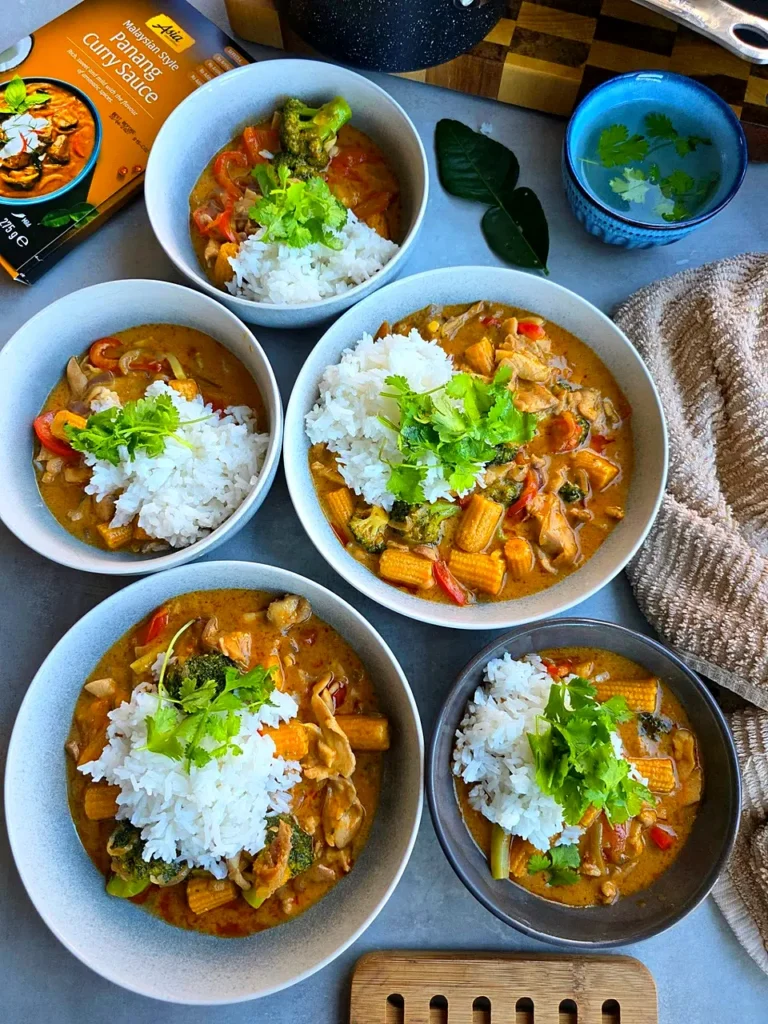
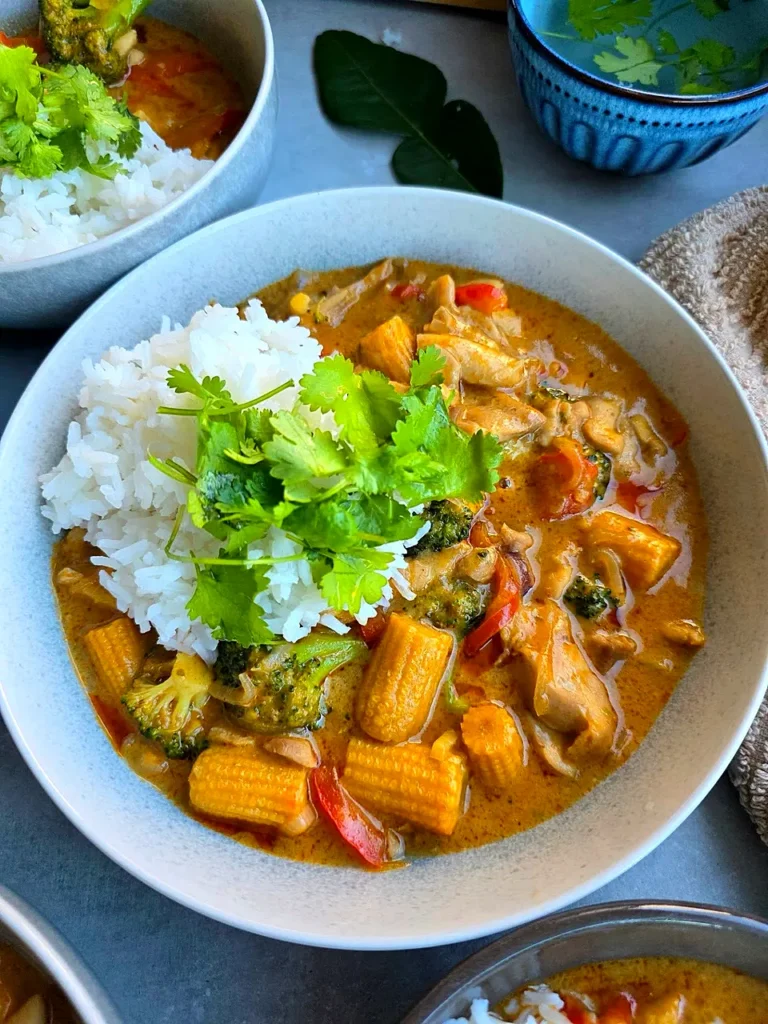
Ladle the curry into bowls and then spoon the fluffy jasmine rice over the top. It might seem backwards but it works — the rice sits just above the sauce, soaking up some of that coconut curry from below. Scatter the fresh coriander leaves generously over the top and serve immediately.
My Extra Flavour Tips
The curry sachets I use are genuinely mild — which is great for a family dinner, but if you’re cooking just for adults or want to build more complexity, here’s what I do:
- Coriander stems in the simmer. Don’t skip this. The stems have more flavour than people give them credit for, and they add a freshness that the dried paste alone can’t replicate.
- Scrunching the lime leaves. It sounds simple, but lightly crushing the makrut lime leaves before adding them to the pot releases their essential oils, and you’ll smell the difference immediately.
- Fish sauce + soy sauce together. One brings saltiness, the other brings that distinct umami depth. Using both is what takes this from tasting like a packet curry to something that feels layered and thoughtful.
- Don’t rush the simmer. A good 10-minute simmer after all the vegetables and seasonings are in makes a real difference. It allows everything to meld together rather than tasting like separate components in a sauce.
Serving Suggestions
This dish is a complete meal on its own — protein, vegetables, carbohydrates, all in one bowl. But if you’re feeding a hungry crowd or want a more generous spread:
- A simple cucumber and tomato salad with a squeeze of lime makes a refreshing side.
- Warm flatbread on the side for scooping up any remaining sauce.
- A cold glass of mango lassi or coconut water alongside keeps the flavour theme going.
And if you love the idea of building flavourful dinner bowls like this, the cajun jambalaya on this site scratches a similar “one pot, big flavour” itch with a completely different flavour profile.
Storing and Reheating
This curry stores really well, which makes it a solid option for meal prep.
- Refrigerator: Let it cool completely, then store in an airtight container for up to 3 days. Store the rice separately.
- Freezer: The curry (without rice) freezes well for up to 2 months. Thaw overnight in the fridge and reheat gently on the stovetop over low heat, adding a small splash of water or coconut cream if the sauce has thickened too much.
- Reheating: A few minutes on the stove over medium-low heat works best. The microwave is fine for a quick lunch, just stir halfway through.
A Note on the Curry Sachets
I use the Penang curry sachets from Aldi, and for the price and accessibility, they’re genuinely impressive. They’re on the mild side (no real heat at all), which is why I add the extra seasonings — soy sauce, fish sauce, makrut lime leaves, and coriander stems — to build more complexity.
If you can’t find these, any pre-made Penang or Panang curry paste will work. Adjust quantities based on the paste’s intensity; a Thai-style curry paste from an Asian grocer will be significantly more potent, so start with a smaller amount and taste as you go. The coconut cream and the seasoning ratios stay the same regardless of which paste you use.
Frequently Asked Questions
Can I use chicken thighs instead of breast? Absolutely. Thighs are actually more forgiving — they stay juicier and have a slightly richer flavour. Slice them the same way and they’ll cook in the same time.
What can I substitute for makrut lime leaves? A small amount of lime zest can add a similar citrusy note, though it won’t be quite the same. If you can find a jar of makrut lime leaves at an Asian grocer, they last a long time in the freezer and are worth having on hand.
Can I make this vegetarian? Yes! Swap the chicken for firm tofu or chickpeas, replace the fish sauce with soy sauce or a splash of tamarind, and you’ve got a delicious plant-based version. The coconut base and vegetables carry the flavour beautifully.
Is this dish spicy? Not at all with the Aldi sachets — this is genuinely one of the mildest curries you can make at home. If you want heat, add a sliced fresh chilli or a small amount of chilli paste during the simmer.
Can I add other vegetables? Definitely. Zucchini, green beans, snow peas, or mushrooms would all work well. Add denser vegetables with the initial batch and any delicate greens (like baby spinach) right at the end.
Whether it’s a busy Tuesday or a relaxed weekend dinner, this chicken Penang curry delivers every single time. It’s the kind of recipe that earns its place in the permanent rotation — affordable, colourful, genuinely delicious, and the sort of meal that brings everyone to the table without complaint. Once you make it the first time, you’ll understand why it keeps reappearing on our weekly menu.

Chicken Penang Curry with Vegetables
Description
Ingredients
Curry Base
- 600 g boneless chicken sliced into bite-sized pieces
- 2 Penang curry sachets
- 270 ml coconut cream
Vegetables
- 410 g baby corn spears drained, each cut into 3 pieces
- 1 head broccoli cut into florets, inner stem cut into matchsticks
- 1 red onion peeled and thinly sliced
- 1 red capsicum thinly sliced
Seasonings & Aromatics
- 2 tbsp soy sauce
- 2 tbsp fish sauce
- 1 tsp white sugar
- salt pinch, to taste
- 3 makrut lime leaves scrunched before adding
- fresh coriander leaves and stems separated; stems finely chopped, leaves reserved for garnish
To Serve
- 1.5 cups jasmine rice cooked via absorption method
Instructions
Rice
- Cook the jasmine rice using the absorption method. Combine rice with water (1:1.5 ratio), bring to a boil, then reduce heat to the lowest setting. Cover with a lid and allow to absorb for 12–15 minutes. Remove from heat and let it steam, lid on, for a further 5 minutes before fluffing with a fork.
Curry
- Prepare the curry sauce as directed on the sachet packaging, using the coconut cream as the liquid base. Bring the sauce together over medium heat in a large pan or wok until fragrant.
- Add the sliced chicken to the curry sauce. Stir well to coat and cook through, stirring occasionally, until no pink remains.
- Add the broccoli florets, broccoli stem matchsticks, baby corn pieces, sliced red onion, and sliced red capsicum. Stir everything together so the vegetables are fully coated in the sauce.
- Add the soy sauce, fish sauce, white sugar, a pinch of salt, scrunched makrut lime leaves, and the finely chopped coriander stems. Stir to combine, then let the curry simmer for about 10 minutes until the vegetables are tender but still have a slight bite and the sauce has deepened in colour and flavour. Taste and adjust seasoning as needed.
Serving
- Ladle the curry into bowls and spoon the fluffy jasmine rice over the top. Garnish generously with the fresh coriander leaves and serve immediately.
Notes
- Using two curry sachets is recommended when adding this many vegetables — it ensures the sauce has enough depth and flavour to coat everything properly. One sachet can work if you reduce the vegetable quantity.
- Scrunch the makrut lime leaves in your hands before adding them to the pot — this releases their natural oils and significantly boosts the aroma and flavour of the curry.
- Do not discard the inner broccoli stem. Sliced into matchsticks, it becomes tender and flavourful when simmered in the sauce, and reduces food waste.
- The coriander stems are added during cooking while the leaves are reserved for garnish — the stems carry more flavour when simmered, while the leaves are best fresh.
- Leftovers keep well in an airtight container in the refrigerator for up to 3 days. Store rice separately. The curry can also be frozen for up to 2 months — thaw overnight in the fridge and reheat gently on the stovetop with a splash of water or coconut cream if needed.
- To make this vegetarian, substitute the chicken with firm tofu or chickpeas and replace fish sauce with soy sauce or tamarind.
Leave a Reply