

You need a side dish that looks like it took hours of effort but actually took you fifteen minutes of hands-on work before the oven does everything else.
The real star of this gratin isn’t the potatoes — it’s the cream mixture. Heavy cream and whole milk get married with two types of cheese (a nutty Parmesan and an aged, sharper cheese that melts into something almost magical), dried oregano, and fresh thyme leaves stripped straight from the stem.
When you pour that fragrant, herb-flecked sauce over paper-thin potato slices and let it all bubble away in the oven, something extraordinary happens. The edges crisp.
The centers turn silky. The cheese forms a golden crust that crackles when you tap it with a spoon.
And suddenly, plain old potatoes become the most fought-over thing on the dinner table.
I’ve made this Classic French Potato Gratin Dauphinois for weeknight dinners, holiday feasts, and everything in between — and every single time, someone asks for the recipe. It’s deceptively simple, deeply comforting, and proof that a handful of good ingredients treated right can outshine almost anything else on the plate.
What Is Gratin Dauphinois?
Gratin Dauphinois hails from the Dauphiné region in southeastern France, where it’s been a staple for centuries. At its core, it’s thinly sliced potatoes baked slowly in cream until they practically melt into one another.
The traditional version doesn’t even include cheese — it relies purely on the richness of cream and the starchiness of the potatoes to create that luscious texture. But honestly?
A generous blanket of Parmesan and aged cheese on top never hurt anybody, and in this version, it adds a salty, umami depth that takes the whole thing up a notch.
What sets a true gratin Dauphinois apart from other potato bakes is the technique. The potatoes are sliced paper-thin — we’re talking translucent — so they cook evenly and absorb every drop of that herbed cream.
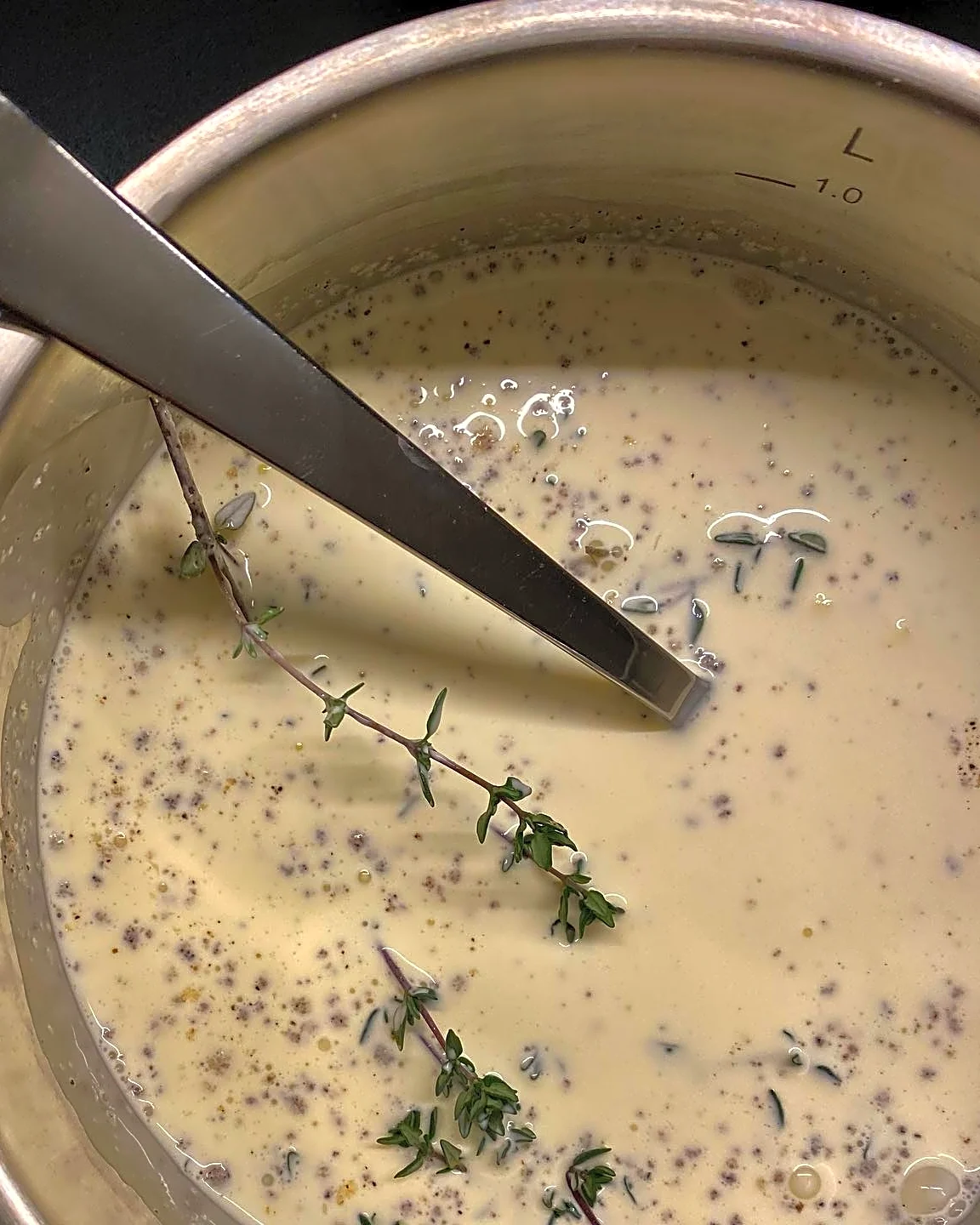
You don’t pre-cook them, you don’t parboil them. They go into the dish raw and come out impossibly tender.
The oven does all the work at a gentle 160°C, giving the cream time to reduce and thicken naturally while the potatoes soften into something almost custard-like.
Best Potatoes for Potato Gratin
Waxy potatoes are your best friend here. Think Charlotte, Nicola, new potatoes, or even Yukon Golds if that’s what your grocery store has on hand.
The reason is simple: waxy potatoes hold their shape beautifully during the long bake, so you get distinct, tender slices rather than a starchy, gluey mess. They also have just enough natural starch to help thicken the cream sauce as everything cooks together.
Starchy varieties like Russets will fall apart too quickly and turn the whole dish into mashed potatoes with a crust — which, don’t get me wrong, isn’t the worst thing in the world, but it’s not a gratin Dauphinois. You want those individual slices to be visible when you scoop out a serving, each one coated in that gorgeous, cheesy cream.
One more thing: scrub the potatoes clean but don’t feel like you have to peel them. The skins add a bit of texture and rustic charm, and honestly, peeling a kilo of potatoes is nobody’s idea of a good time on a weeknight.
How to Get a Perfectly Crispy Golden Top
This is where a lot of gratins go wrong. People either pack the potatoes too tightly into the dish or use too much liquid, and they end up with a soggy, pale top instead of that gorgeous golden crust.
The trick is in how you arrange the slices.
Instead of laying them flat in overlapping rows, stand the potato slices up vertically in loose stacks. Think of them like little potato soldiers lined up in the dish, leaning against each other but not pressed together.

This gives the hot air in the oven room to circulate between the slices, and it lets the cheese on top crisp up beautifully. You want gaps — not so many that the dish looks sparse, but enough that the cream can seep into every crevice and the top can actually brown.
That final sprinkle of Parmesan over the top is your golden ticket. It forms a thin, crackly crust as it bakes, and combined with the butter you greased the dish with, you get those irresistible caramelized edges where the cream meets the dish.
If you want an even crispier finish, you can crank the oven up to 180°C for the last five minutes — just keep a close eye on it so the cheese doesn’t burn.
What to Serve with Potato Gratin Dauphinois
This gratin plays well with almost anything. It’s rich, creamy, and indulgent, so it pairs best with proteins and vegetables that balance that out.
A simple roasted chicken with crispy skin is the classic French combination — the juices from the chicken mingle with the gratin on the plate in a way that’s almost unfairly delicious.
If you’re leaning toward beef, a seared steak or a slow-cooked roast works beautifully alongside it. For something with a bit more personality, try pairing it with this garlic butter chicken and potatoes for a double-potato situation that nobody will complain about, or go with a creamy Cajun beef pasta if you want the gratin to play second fiddle to a spicier main.
On the vegetable side, something green and bright cuts through all that richness perfectly. com/roasted-broccoli-salad-parmesan/”>roasted broccoli salad with Parmesan would be lovely), or even just some steamed green beans tossed with lemon zest.
The gratin is the indulgent centerpiece of the side dishes, so let everything else be fresh and simple.
Tips for the Best Gratin Every Time
A few things I’ve learned from making this dish more times than I can count:
A mandoline is your best tool for this — it gives you consistent, paper-thin slices that cook evenly. If you don’t have one, a very sharp knife and some patience will do the job.

Aim for about 2-3mm thick. Thicker slices won’t cook through properly in 35 minutes, and you’ll end up with crunchy centers, which nobody wants.
Toss the slices in the cream mixture before arranging them. This ensures every single slice is coated, not just the ones that happen to sit at the bottom. It takes an extra minute but makes a huge difference in the final result — you’ll get evenly seasoned, evenly creamy potatoes throughout.
Once the gratin comes out of the oven, let it sit for five to ten minutes before serving. The cream will thicken slightly as it cools, and the whole thing will hold together better on the plate.
Plus, you won’t scorch the roof of your mouth on molten cheese — learn from my mistakes.
Ovens vary, and so does the thickness of your potato slices. When a fork slides easily into the center of the gratin with no resistance, it’s ready.
If the potatoes are still firm, give it another five minutes and check again. The top should be deep golden and bubbling around the edges.
This is the kind of recipe that becomes a permanent part of your rotation once you’ve made it once. It’s simple enough for a Tuesday night and impressive enough for a holiday table, and that creamy, herby, cheesy combination never gets old.
com/mashed-potatoes-meatballs-rich-gravy/”>mashed potatoes with meatballs and rich gravy — because when it comes to potatoes, more is absolutely more.
Leave a Reply